A Kitsilano couple recently sat across from us with two renovation quotes in hand—one for $140,000, the other for $310,000—for what they described as “basically the same job.” It wasn’t. One quote assumed the existing electrical panel and plumbing stayed untouched. The other accounted for what a proper inspection would almost certainly find in a house built in 1962: knob-and-tube wiring behind the plaster and cast iron drain lines nearing the end of their lifespan.
That gap is the real story behind full home renovation cost in this city. It’s rarely about one contractor overcharging and another lowballing—it’s about what’s actually included in the number, and how much of your home’s hidden infrastructure needs to be brought up to current standards. This guide walks through what a whole house renovation genuinely costs in Vancouver right now, broken down by room, by scope, and by the decisions that move your total the most.
The Quick Answer
For homeowners who just want a number before reading further: the average cost of full home renovation for a typical 1,500–2,000 sq. ft. Vancouver home runs $150,000 to $350,000, or roughly $90–$220 per square foot depending on scope. Cosmetic-only updates sit below that range; structural work, layout changes, and full system replacements push it above.
Everything after this point explains what actually determines where your project lands in that range.
What Actually Drives Full Home Renovation Cost in Vancouver
Before getting into room-by-room numbers, it helps to understand the handful of variables that swing a renovation budget more than anything else:
- Renovation cost per square foot — a cosmetic refresh might run $40–$60/sq. ft., while a full structural renovation with system replacement can reach $150–$220/sq. ft.
- Age and condition of the home — homes built before the 1980s frequently need electrical and plumbing upgrades that aren’t optional once walls are opened.
- Scope of structural renovation — removing walls, reconfiguring floor plans, or adding square footage requires engineering, permits, and additional labour.
- Material and finish tier — the difference between stock cabinetry and custom millwork, or laminate and engineered hardwood, can shift a room’s cost by 40–60%.
- General contractor Vancouver rates — labour costs in the region run higher than the national average due to demand and cost of living, which affects every trade on the project.
- Permitting and inspection requirements — Vancouver’s permit process is more thorough than many neighbouring municipalities, which adds both time and cost to structural work.
How Much Does Full Home Renovation Cost, Broken Down by Tier
Not every renovation needs the same level of investment. Here’s how most Vancouver projects break down:
|
Tier |
Scope |
Typical Total (1,500–2,000 sq. ft.) |
|
Cosmetic Update |
Paint, flooring, fixtures, minor cabinet work |
$65,000 – $100,000 |
|
Full Home Renovation |
New kitchen & bathrooms, some electrical/plumbing, minor layout changes |
$150,000 – $250,000 |
|
Full Structural Renovation |
Gut renovation, layout changes, full system replacement, premium finishes |
$280,000 – $450,000+ |
If your contractor’s quote sits noticeably outside these bands, it’s worth asking specifically what’s included—permits, contingency, and design fees are sometimes left out of an initial number to make it look more competitive.
Cost of Full House Renovation: What's Actually Inside the Number
A full house renovation is rarely just “new finishes.” When we scope a cost of full house renovation for a client, the estimate typically has to account for:
- Electrical rewiring and panel capacity upgrades
- Plumbing replacement (especially galvanized or cast iron lines)
- Insulation and drywall throughout
- Full flooring replacement
- Kitchen and bathroom rebuilds
- Window and door replacement where needed
- HVAC updates
- Permit fees and design/engineering costs
This is also why comparing quotes purely on the bottom-line number can be misleading. Two full home renovation contractor proposals for the “same” house can differ by six figures simply based on what’s assumed to be in scope versus what gets treated as a change order later.
Kitchen Renovation Costs: The Room That Moves the Budget Most
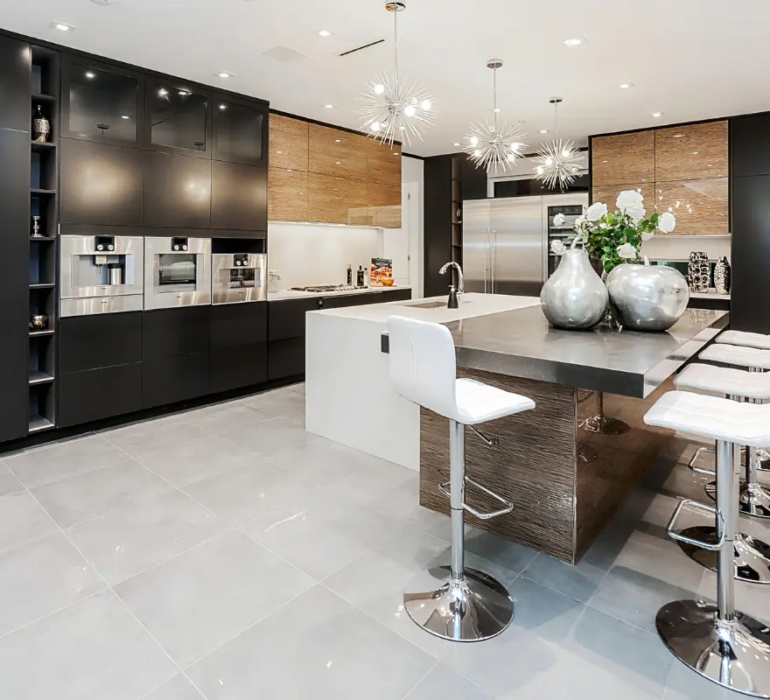
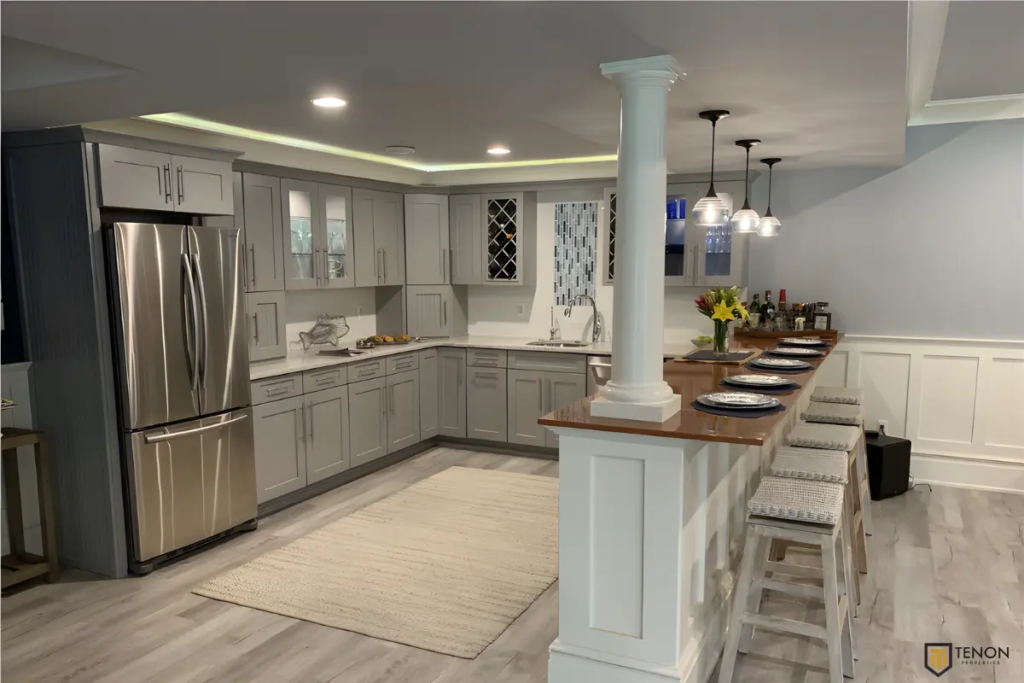
Ask any experienced renovator which room decides the fate of a budget, and the answer is almost always the kitchen. Kitchen renovation costs in Vancouver typically fall into these bands:
- Refresh (countertops, backsplash, hardware, paint): $15,000 – $25,000
- Mid-range remodel (new cabinets, appliances, flooring, lighting): $40,000 – $75,000
- Custom, layout-changing renovation: $85,000 – $160,000+
If you’re specifically wondering how much to redo a kitchen with a layout change—say, removing a wall to open the kitchen to the living room—expect the higher end of that range, since moving plumbing and gas lines adds both permit and labour costs. For a straightforward question like how much does a kitchen remodel cost without structural changes, the mid-range band is the most realistic starting point for most Vancouver homes.
Homeowners searching kitchen renovations near me should look specifically for a kitchen renovation Vancouver specialist rather than a general renovation company—cabinetry fit, countertop templating, and appliance integration are specialized enough that dedicated experience shows up in the final result. Our kitchen renovation page outlines what’s typically included at each tier.
Bathroom Renovation Costs: Small Room, Significant Investment
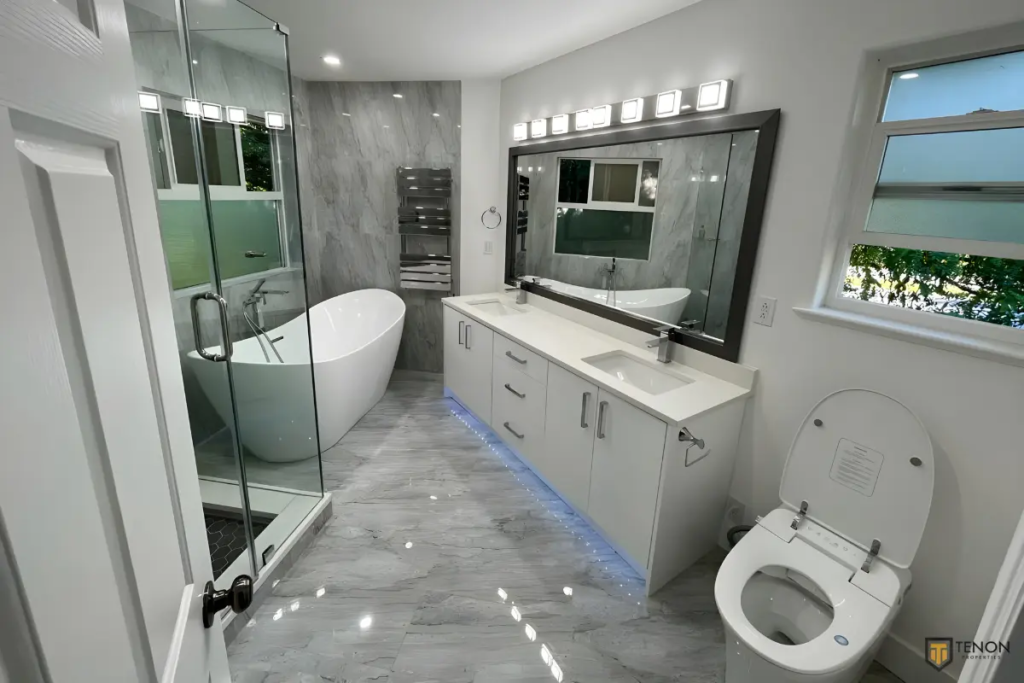
Per square foot, bathrooms are often the most expensive room in the house to renovate because so much plumbing, waterproofing, and tile work is packed into a small footprint. For homeowners asking how much to renovate a bathroom, here’s what’s realistic:
- Powder room update: $8,000 – $15,000
- Full bathroom renovation (tub/shower, vanity, tile, flooring): $22,000 – $42,000
- Primary ensuite renovation (heated floors, walk-in shower, custom vanity): $45,000 – $80,000+
The cost of a bathroom renovation rises sharply when plumbing needs relocating or when existing waterproofing doesn’t meet current code—a common discovery in homes over 30 years old. This is one area where hiring the right trade matters more than almost anywhere else in the house: improperly waterproofed showers are among the most expensive callbacks in residential renovation. When comparing bathroom contractors Vancouver-wide, ask specifically about their waterproofing system and warranty—not just the finish materials. Details on our process are on the bathroom renovation page.
Basement Renovations Vancouver Homeowners Are Investing In
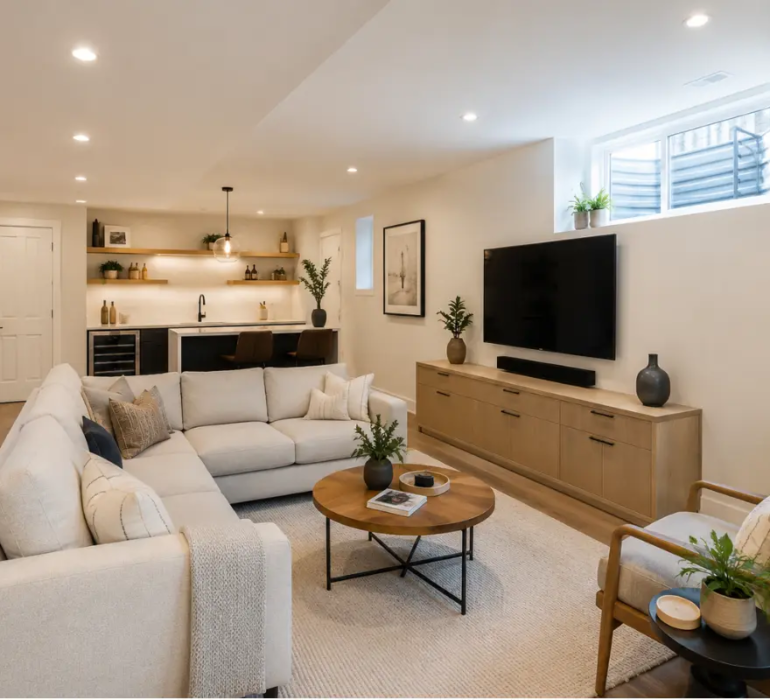
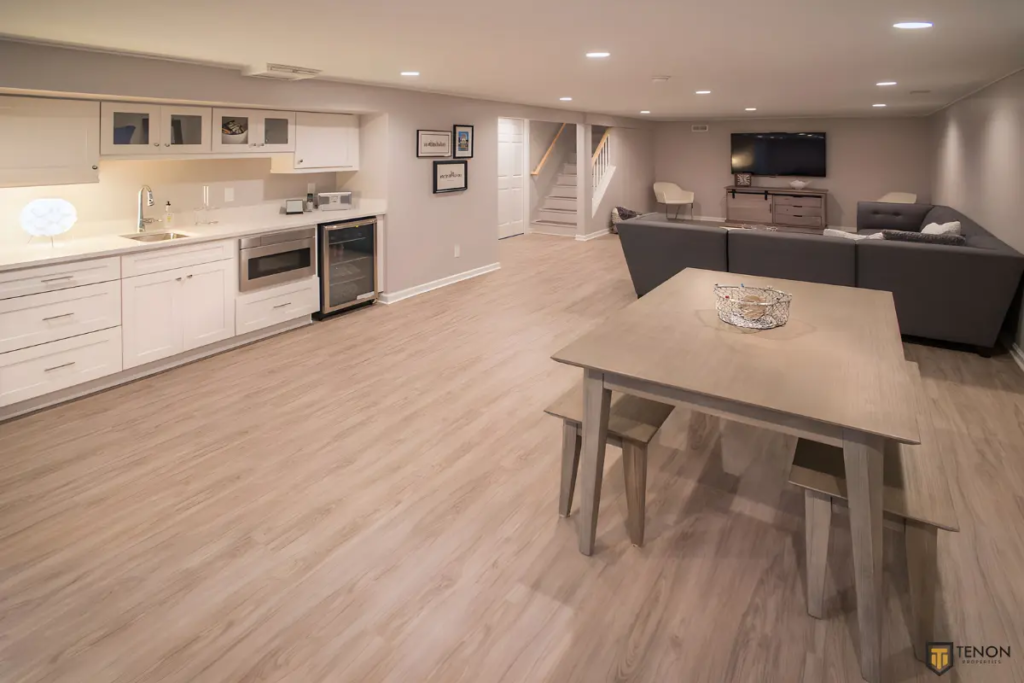
Basements offer some of the best return per renovation dollar in this market, particularly when the goal is a legal secondary suite. Basement renovations Vancouver-wide typically break down as follows:
- Basic finishing (drywall, flooring, lighting, no plumbing changes): $30,000 – $50,000
- Full basement suite (kitchen, bathroom, separate entrance, sound insulation): $75,000 – $130,000
Given Vancouver’s coastal climate, moisture management is not optional—a vapour barrier, proper drainage, and sump pump assessment should be part of any basement scope before finishes go in. More detail is available on our basement renovation page.
Where Homeowners Can Control Cost Without Cutting Corners
A home renovation budget doesn’t have to mean choosing the cheapest option at every turn. A few places where smart trade-offs genuinely work
- Keep the plumbing footprint the same where possible. Moving a toilet or sink a few feet can add thousands in labour alone.
- Splurge on counters and fixtures, save on cabinet boxes. Semi-custom cabinetry with upgraded hardware and countertops often looks fully custom at a fraction of the cost.
- Phase cosmetic-only rooms if the budget is tight, but renovate all rooms with shared systems (plumbing, electrical) together to avoid paying for the same mobilization twice.
- Get a second opinion on structural changes. Sometimes a wall assumed to be load-bearing isn’t, and a quick engineering assessment can save a five-figure line item.
Hiring a Full Home Renovation Contractor: What to Actually Check
Choosing the right full home renovation contractor matters more than any single material decision. Before signing anything, confirm:
- Liability insurance and WCB coverage — this protects you, not just the contractor, if something goes wrong on site.
- A workmanship warranty, ideally at least one to two years post-completion.
- Direct project communication — full renovations involve dozens of small decisions, and you want a team that loops you in as they come up rather than after the fact.
- Local permit experience — a contractor who regularly works with the City of Vancouver’s permitting office will move faster than one navigating it for the first time.
- Recent, relevant portfolio work — if you’re specifically comparing kitchen renovations near me, ask to see recent kitchen projects, not general renovation photos.
Permits and Financing: Two Things to Sort Out Early
Structural changes, new plumbing, and electrical panel upgrades typically require permits in Vancouver — confirm specifics through the City of Vancouver’s building and renovating resources before finalizing your scope, since unpermitted work can create real problems at resale.
On the financing side, many homeowners aren’t aware that renovation costs can sometimes be rolled into mortgage financing rather than paid entirely out of pocket. CMHC’s home renovation financing options is a useful resource for understanding what’s available before your budget gets locked in.
A Realistic Example: Mid-Range Full Renovation
Here’s how a real mid-range full home renovation budget might break down for a 1,700 sq. ft. home built in the 1970s:
|
Line Item |
Estimated Cost |
|
Kitchen renovation |
$58,000 |
|
Two bathroom renovations |
$52,000 |
|
Basement finishing |
$42,000 |
|
Electrical & plumbing updates |
$32,000 |
|
Flooring throughout |
$23,000 |
|
Permits & design fees |
$11,000 |
|
Contingency (10%) |
$22,000 |
|
Total |
~$240,000 |
Your own numbers will shift based on square footage, structural scope, and finish choices—but this reflects a realistic mid-range project rather than a promotional low-end estimate.
Full Renovation vs. Partial Renovation: Which One Actually Fits Your Home?
Before locking in a scope, it’s worth stepping back and asking whether your home needs a full renovation at all, or whether a targeted, partial approach makes more sense. This decision affects your budget more than almost any other choice you’ll make.
A whole house renovation tends to be the right call when:
- Multiple major systems—electrical, plumbing, HVAC are all approaching end of life around the same time
- The floor plan no longer works for the household (closed kitchens, poor flow between living spaces, an unused basement)
- You’re planning to stay in the home long-term and want to avoid repeated disruptive projects every few years
- You’re preparing to list the home and want to maximize resale value in a competitive market
A partial renovation is often the smarter choice when:
- One or two rooms are visibly outdated, but the home’s core systems are in reasonably good condition
- Budget needs to be spread across a longer timeframe
- No structural or system-wide changes are needed
There’s a common misconception that partial renovations are automatically cheaper in total. That’s not always true. If a kitchen and two bathrooms all need work within the same year or two, bundling them into one full home renovation project is frequently less expensive overall than paying for separate permits, separate contractor mobilizations, and separate design consultations three different times.
What Happens During a Full Renovation: A Realistic Timeline
Understanding the phases of a renovation clarifies where the cost of a full house renovation is actually spent—and why compressing any one phase tends to backfire later.
- Design and scoping (2–4 weeks): Site walkthrough, measurements, material selection, and a detailed written scope of work.
- Permit application (2–8 weeks): Timeline depends on project complexity and current permit office volume — structural and electrical changes take longer to approve.
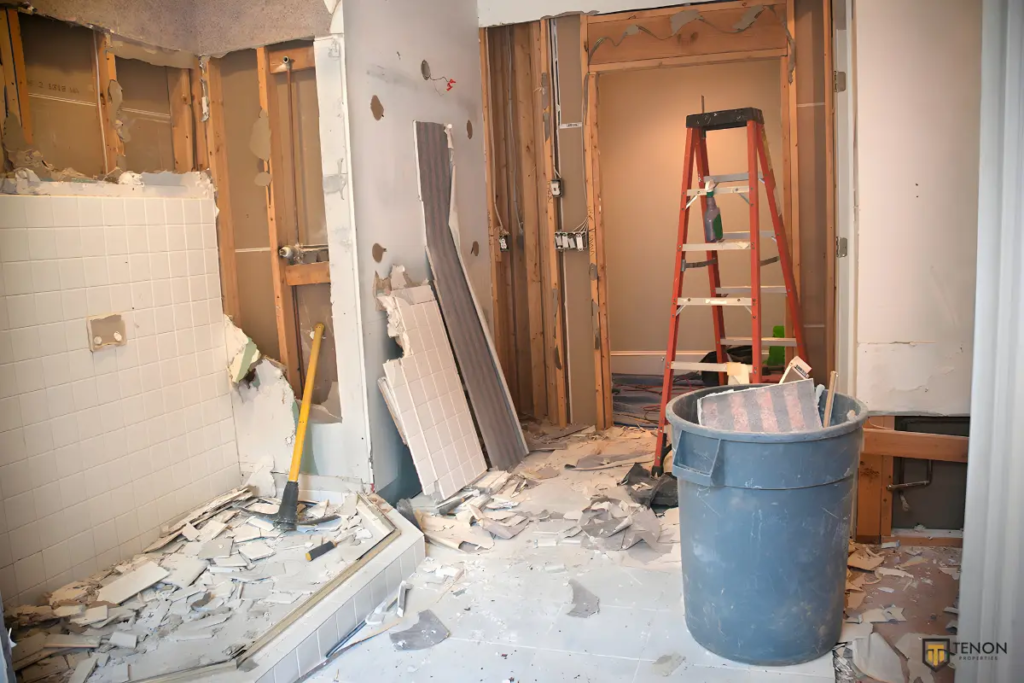
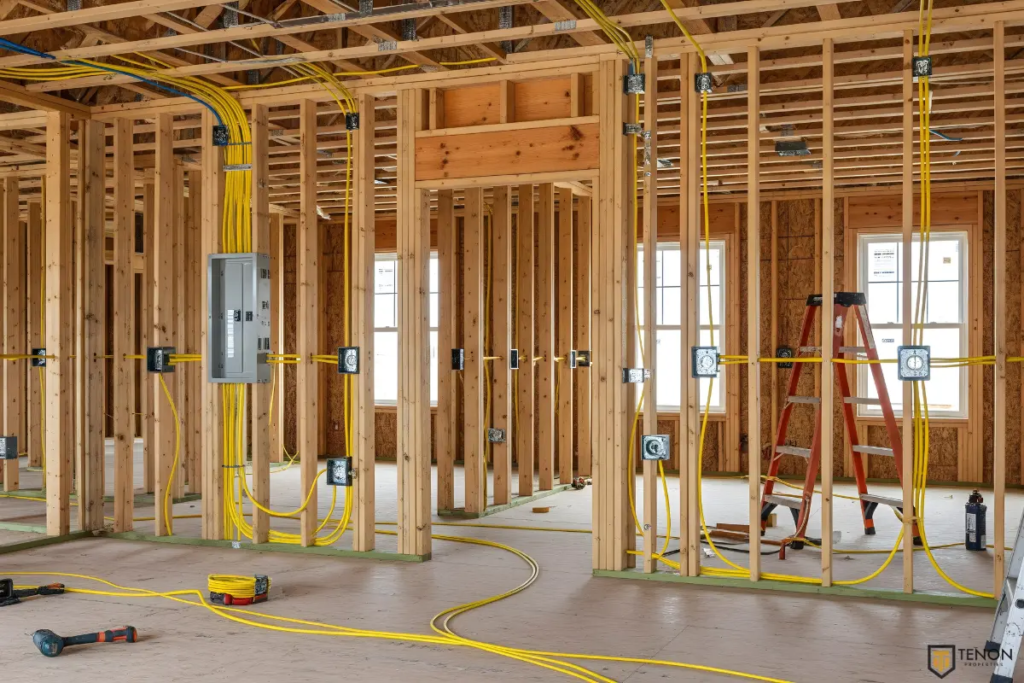
- Demolition (1–2 weeks): This is typically when hidden issues surface — old wiring, water damage, or plumbing that doesn’t meet current standards.
- Rough-in work (2–4 weeks): Electrical, plumbing, and HVAC updates behind the walls, each inspected before drywall closes them in.
- Finishing work (4–8 weeks): Cabinetry, tile, flooring, paint, and fixtures — the stage where the transformation becomes visible.
- Final inspections and walkthrough (1–2 weeks): Confirming the completed work meets code and matches the agreed scope.
Most full-scope Vancouver renovations run 4 to 7 months from permit approval to move-back-in, though homes with structural changes or heritage designation can extend beyond that. Building a realistic timeline into your planning — alongside a realistic contingency budget — is usually what separates a smooth renovation from a stressful one.
Why Homeowners Work With Tenon Properties
We’ve been renovating homes across the Lower Mainland for more than 25 years, and the pattern that consistently keeps projects on time and on budget is simple: we work directly with homeowners instead of routing every decision through layers of subcontracted management. When something needs to change mid-project, it gets actioned immediately instead of sitting in an email chain.
Every project is backed by a 2-year workmanship warranty, $5 million in liability coverage, and full WCB coverage — protection that should be standard, not a premium add-on. Whether you’re planning a full house renovation or want to start with a single room, our team will walk your property and provide a scope-specific estimate rather than a generic range. Explore our full house renovation services, or visit our home page to see the full range of what we handle, from kitchens and bathrooms to basements and exterior work.
Final Thoughts
There’s no single figure that answers, “How much does full home renovation cost?” honestly, because no two homes carry the same hidden condition behind their walls. What you can control is planning around a realistic range, building in contingency, and choosing a contractor who explains what’s actually included in their number rather than just quoting the lowest one.
If you’d like a scope-specific estimate for your own home, get in touch with Tenon Properties—we’ll walk the property with you and build a number around your home, not a national average.
Frequently Asked Questions
Most homeowners spend $150,000–$350,000 for a full renovation of a 1,500–2,000 sq. ft. home, with the final number driven mainly by structural scope and finish level.
Usually, yes, when rooms share systems like plumbing and electrical. Combining projects means paying for permits, design, and site mobilization once instead of multiple times.
Structural surprises — outdated wiring, deteriorating plumbing, or moisture damage found once walls are opened — are the most common source of budget overruns, which is why a contingency fund matters.
Most full-scope projects take 4–7 months from permit approval to completion, though homes needing structural or heritage considerations can take longer.
Generally, yes — kitchens and bathrooms tend to offer the strongest return among renovation categories in Vancouver’s resale market, particularly when finishes are updated to match current buyer expectations.
It depends on scope. If the kitchen, plumbing, and electrical are affected for extended stretches, many homeowners choose to relocate temporarily. Projects confined to a basement or a single wing of the house are often livable with some disruption, especially if bedrooms and at least one bathroom remain untouched.