Vancouver’s coastal climate doesn’t behave like the rest of Canada. There’s no hard freeze that shuts the growing season down for five months, no single “landscaping season” that opens in May and closes in September. Instead, homeowners here get a longer, messier, more flexible window—and that confuses a lot of people planning a yard renovation for the first time.
Quick answer: In Metro Vancouver, the best time for a landscaping renovation depends on what you’re building. Hardscaping—patios, retaining walls, drainage, decks, and grading—is best scheduled in late summer through fall (August–November), when the ground is dry and stable. Planting, sod, and softscaping work best in early spring (March–May) or early fall (September–October), when soil is workable and rainfall does the watering for you. Structural and design work—permits, drawings, and contractor bookings—should start in winter (December–February), Vancouver’s true landscaping off-season, so your crew is on-site the moment good weather arrives.
That’s the short version. The rest of this guide breaks down exactly why, month by month, with the frost dates, rainfall data, permit timelines, and project sequencing that actually matter for a Lower Mainland property plus the mistakes we see homeowners make most often at Tenon Properties after 25+ years of renovating homes across Vancouver, Surrey, Burnaby, and the surrounding region.
Is Landscaping a Seasonal or Year-Round Trade in Greater Vancouver?
It’s both. Landscaping in Greater Vancouver is a year-round trade in the sense that reputable contractors work through all twelve months, but it’s seasonal in the sense that different tasks are tied to specific weather windows. A well-run landscaping company shifts its focus throughout the year—design and permitting in winter, planting in spring, hardscaping in summer, more planting and cleanup in fall, and structural or drainage work whenever the ground allows.
This is one of the biggest misconceptions homeowners bring to a renovation consultation. In colder Canadian cities, landscaping genuinely is a seasonal business—the ground freezes solid, and nothing happens outdoors from November to April. Vancouver doesn’t have that problem. The Lower Mainland sits in plant hardiness zones 8a–8b, one of the mildest zones in the country, with an average last frost date around mid-March and first frost in late November—a frost-free growing window of roughly 250–260 days a year, according to Environment and Climate Change Canada’s climate normals. The ground rarely freezes below a few centimetres, even in January.
What actually limits landscaping work here isn’t the cold—it’s water. Vancouver receives close to 1,200 mm of rain a year, with roughly two-thirds of it falling between October and March, per the same Environment Canada data. So instead of “Can we dig?” the real seasonal question in this region is “Can we dig without turning the yard into mud, and will newly planted material survive the conditions right after installation?” That distinction is what this whole guide is built around.
Understanding Vancouver's Climate Before You Plan a Renovation
A landscaping renovation is only as good as the ground conditions it’s built on, so before getting into month-by-month planning, here’s what actually drives the timing decisions on a Vancouver property. Figures below are drawn from Environment and Climate Change Canada’s 1991–2020 climate normals for the Vancouver area—worth checking directly if you’re planning around an exact date, since normals are updated by decade.
|
Factor |
Vancouver / Metro Vancouver Average |
Why It Matters for Renovation Timing |
|
Plant hardiness zone |
8a (inland) to 8b (near water/downtown) |
One of the mildest zones in Canada; supports an unusually long planting season |
|
Average last spring frost |
~March 15 |
Marks when tender plantings and new sod can safely go in the ground |
|
Average first fall frost |
Late November |
Marks the practical end of the softscaping season |
|
Annual rainfall |
~1,100–1,200 mm |
Concentrated Oct–March; drives when soil compaction and drainage work is possible |
|
Wettest months |
November, December, January |
Excavation, grading, and concrete work become difficult or impossible. |
|
Driest months |
July, August |
Best structural window, but poor for new plant establishment without irrigation |
|
Ground freezing |
Rare, shallow when it happens |
Unlike most of Canada, frozen ground is not the main seasonal constraint here. |
The takeaway: Vancouver’s landscaping “seasons” are really about soil moisture and workability, not temperature. That single fact explains almost every timing recommendation below.
The Season-by-Season Guide
Spring (March–May): The Best Window for Planting and Design Kickoff
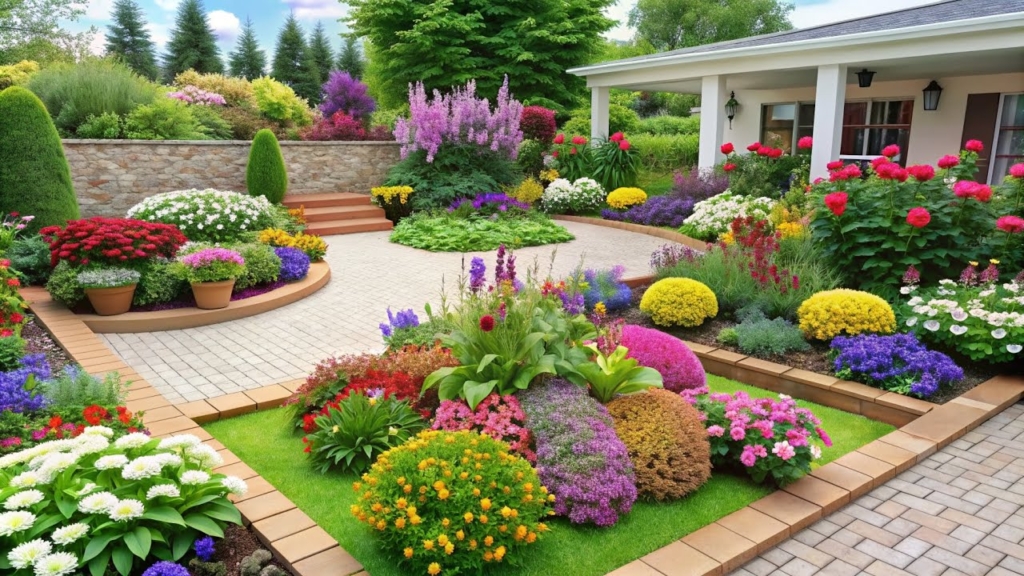
Spring is the best time of year to do planting-based landscaping in Vancouver—new lawns, garden beds, trees, and shrubs—because soil is workable, rainfall handles most of the watering, and plants have a full growing season ahead to establish roots before summer stress hits.
By mid-March, Vancouver is past its average last frost, and the soil has typically dried out enough from winter rains to be workable without excessive compaction. This makes March through May the strongest planting window of the year:
- Soil temperature climbs steadily, encouraging root growth before top growth takes off.
- Rainfall is still frequent but tapering, so new sod, perennials, and transplanted shrubs get consistent natural moisture without you running an irrigation system daily.
- Nurseries stock the widest plant selection of the year, including bare-root trees and shrubs that need to go in before they break dormancy.
Where spring gets tricky is hardscaping. Heavy rain earlier in the season means soil can still be saturated into April, and excavating, grading, or pouring concrete footings in wet, clay-heavy Lower Mainland soil risks poor compaction—which shows up later as settling patios, cracked pathways, or shifting retaining walls. If your renovation combines planting with structural work—a common combination for a full front yard or backyard overhaul—spring is the right time to start design, permitting, and soil prep, but plan hardscape pours for drier stretches later in the season.
What to prioritize in spring: lawn renovation and new sod, tree and shrub planting, perennial beds, irrigation system installation ahead of summer, mulching, and starting design consultations for a summer hardscape build.
Summer (June–August): Prime Time for Hardscaping and Structural Work
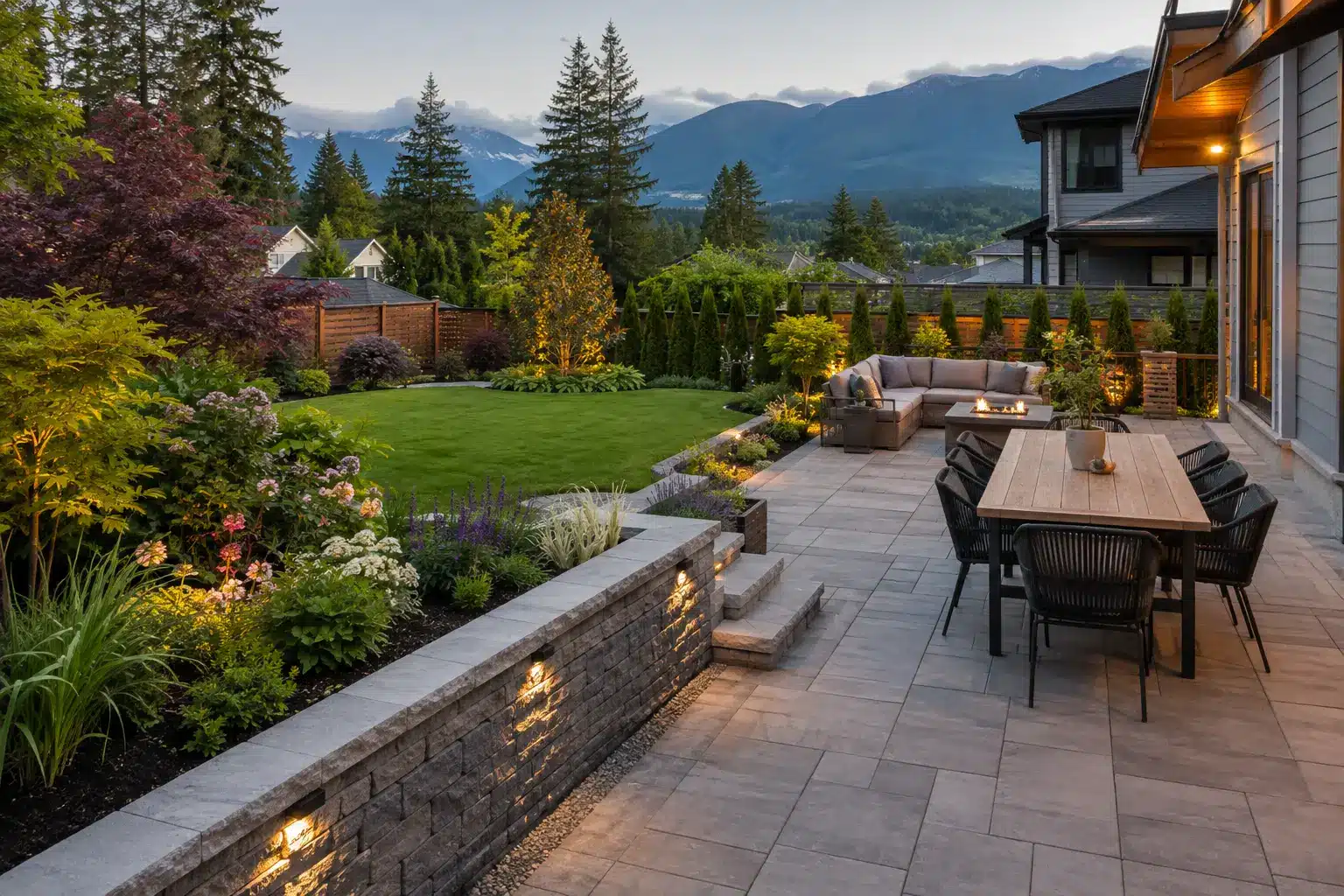
Summer is the most reliable season for hardscaping in Vancouver—patios, retaining walls, decks, outdoor kitchens, walkways, and grading—because the soil is dry and stable enough for proper excavation and compaction. It’s the least reliable season for new planting unless you commit to regular irrigation.
July and August are, on average, Vancouver’s driest months. That dry, stable ground is exactly what you want underneath concrete, pavers, or a retaining wall footing—proper compaction is nearly impossible to guarantee in saturated soil, and skipping that step is one of the most common causes of hardscaping failure.
Summer is also when most homeowners want their outdoor space finished, since it’s the season you’ll actually use a patio, deck, or outdoor kitchen. That demand makes summer the busiest booking window for landscape designers and contractors across the region—a point worth remembering when you’re deciding when to start the process (more on that below).
The trade-off: anything you plant in July or August needs active watering to survive, since natural rainfall essentially disappears. New sod, young trees, and freshly installed garden beds can stress or die within days without irrigation during a hot, dry stretch. If your renovation includes both hardscaping and planting, the standard sequencing is to build the hardscape first, then plant at the tail end of summer or early fall once temperatures moderate.
What to prioritize in summer: patios, decks, retaining walls, outdoor kitchens, fire features, pathways, grading and drainage structures, fencing, and any excavation-heavy work.
Fall (September–November): The Underrated Second Planting Window
Early fall (September into mid-October) is arguably the best overall time for a landscaping renovation in Vancouver—mild temperatures, cooling soil, and returning rainfall create ideal establishment conditions for new plantings, while the ground is still dry enough for hardscaping through most of September.
Many Vancouver homeowners overlook fall, assuming landscaping wraps up with summer. In this climate, that’s backwards. September offers some of the most stable, moderate weather of the year—warm enough for concrete and paver work to cure properly, but with rain beginning to return by October, which is exactly what new sod and plantings need to root in before winter.
Fall planting has a real horticultural advantage over spring: soil is still warm from summer, which encourages strong root development, while cooler air temperatures reduce transplant stress on the top growth. Trees and shrubs planted in September or early October often outperform spring-planted ones by the following summer because they’ve had an entire dormant season to establish roots before facing their first hot, dry season.
By late October and into November, the wettest part of the year returns, and this is when hardscaping work should be winding down. Excavation and concrete work become increasingly unreliable as rainfall climbs toward Vancouver’s wettest months.
What to prioritize in fall: lawn overseeding and renovation, tree and shrub planting, bulb planting for spring colour, finishing touches on summer-built hardscapes, drainage improvements before the rains hit hard, and gutter/grading work tied into an exterior renovation.
Winter (December–February): Vancouver's True Off-Season—and the Best Time to Plan
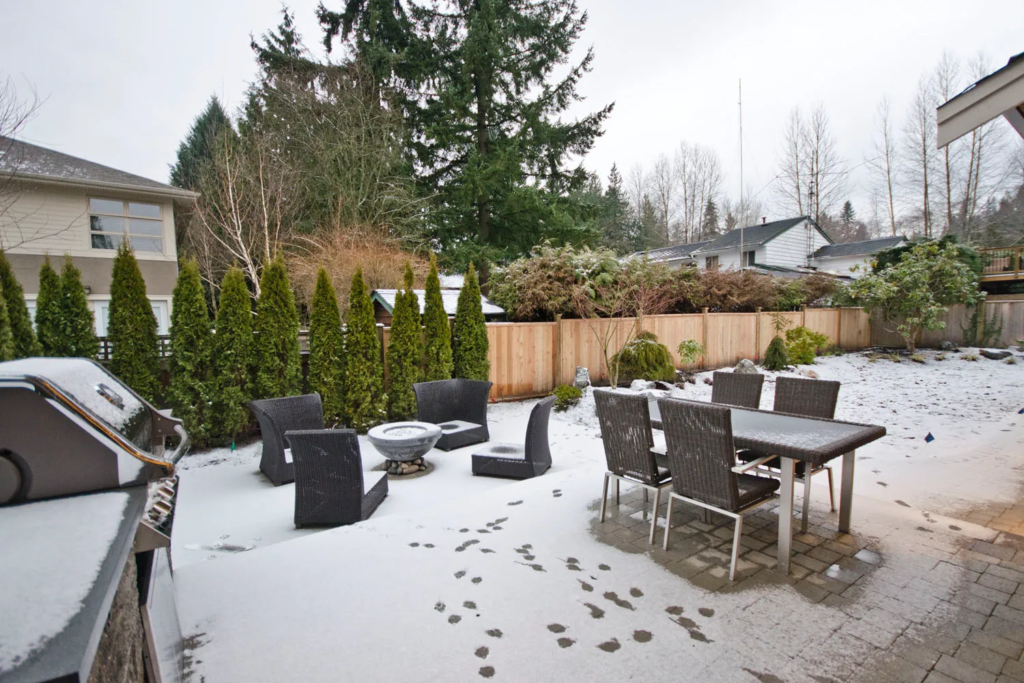
Short answer: Winter isn’t when landscaping renovations get built in Vancouver—it’s when they get designed. Persistent rain makes most excavation and planting impractical, but it’s the ideal season to finalize your design, secure permits (including any required arborist reports or tree removal permits), and book a contractor before the spring and summer rush.
December through February is Vancouver’s wettest stretch, and while the ground rarely freezes, it does stay saturated for weeks at a time. Digging, grading, and compacting soil during this period risks long-term structural problems, and container-grown plants installed into waterlogged soil often struggle with root rot. Most reputable landscaping and renovation companies scale back active building work during these months—which is exactly why it’s the smartest time to do everything that doesn’t require dry ground.
This is also when the paperwork side of a renovation should happen. If your project involves removing or working near a protected tree, the City of Vancouver’s Protection of Trees Bylaw No. 9958 requires a permit for most trees 20 cm or more in diameter at breast height, along with an arborist’s report in nearly all cases. Processing timelines and current fees are listed on the city’s bylaw page directly, and it’s worth checking there before budgeting, since municipal fee schedules are updated periodically. Heritage- or development-linked applications generally take longer—timelines that are far easier to absorb in the quiet winter months than when you’re hoping to break ground in April.
What to prioritize in winter: design consultations, 3D renderings and material selection, permit applications and arborist reports, contractor bookings for spring/summer, dormant pruning of established trees and shrubs, and structural planning for drainage or grading that will be executed once the weather turns.
Season-by-Season Quick Reference
|
Season |
Best For |
Avoid |
Weather Reality |
|
Spring (Mar–May) |
New lawns, planting, garden beds, irrigation setup |
Heavy excavation in early spring while soil is still saturated |
Rainfall tapering, soil workable, longest daylight increase of the year |
|
Summer (Jun–Aug) |
Patios, decks, retaining walls, hardscaping, grading |
Unirrigated new planting |
The driest, most stable ground of the year |
|
Fall (Sep–Nov) |
Tree/shrub planting, sod, lawn renovation, finishing hardscapes |
Starting new excavation after late October |
Ideal September planting window; rain returns by October |
|
Winter (Dec–Feb) |
Design, permits, arborist reports, contractor booking, dormant pruning |
Excavation, concrete pours, new planting |
Wettest, most saturated soil of the year |
How This Ties Into Your Broader Exterior House Renovation
Landscaping rarely happens in isolation, and treating it as a separate project from the rest of your home’s exterior is one of the most common planning mistakes we see. A well-timed exterior house renovation—siding, roofing, decking, drainage, walkways, and grading—should be sequenced together with your landscaping plan, not scheduled around it as an afterthought.
There’s a practical reason for this: grading and drainage decisions made during landscaping directly affect how water moves around your foundation, siding, and any hardscape you build. If your renovation includes both exterior updates and yard work—new siding paired with fresh planting beds, a rebuilt deck paired with a patio, or updated grading paired with a driveway—sequencing matters:
- Structural and exterior envelope work first (roofing, siding, window/door replacement)—you don’t want new plantings or pavers damaged by scaffolding, material staging, or debris.
- Grading, drainage, and hardscaping second—once the building envelope is finished, ground-level work like patios, retaining walls, and drainage systems can be built without risk of exterior work undoing it.
- Planting and softscaping last—new sod, shrubs, and garden beds go in at the very end, once heavy equipment and foot traffic are no longer moving through the yard.
Coordinating a home’s exterior and its landscaping under one project plan helps avoid a common scenario: a landscaping crew finishes a garden bed only to have it trampled two weeks later by a roofing or siding crew.
Permits, Bylaws, and Timing: What Vancouver Homeowners Need to Know
Permit timing is one of the most overlooked pieces of “best time to renovate” planning, and it can add weeks to a project if it’s not built into your schedule from the start. The details below are general guidance—always confirm current fees, forms, and processing times directly with the relevant municipality before finalizing a schedule.
- Tree removal: Under the City of Vancouver’s Protection of Trees Bylaw No. 9958: Most trees 20 cm or more in diameter at breast height are protected—regardless of species or condition—and require a permit before removal, along with an arborist’s report in almost all cases. Removing a protected tree without a permit can carry significant fines plus mandatory replacement planting, per the bylaw’s enforcement provisions. Neighbouring municipalities (Burnaby, Surrey, Richmond, etc.) have their own tree protection bylaws with different thresholds, so check your specific city’s bylaw page if you’re outside Vancouver proper.
- Retaining walls and grading: Larger retaining walls, significant grade changes, and drainage work tied to a building permit typically require municipal review—timelines vary by municipality across Vancouver, Burnaby, Surrey, Richmond, and the Fraser Valley.
- Decks and structures: New decks, pergolas, and outdoor structures over a certain size or height generally require a building permit, separate from any landscaping-specific approval.
Because these approvals can take anywhere from a couple of weeks to over a month, folding permit applications into your winter planning phase is what keeps a spring or summer build on schedule instead of stalled waiting on paperwork.
Planning Ahead: A Realistic Renovation Timeline by Project Type
|
Project Type |
Ideal Build Window |
Recommended Start of Planning |
|
Full yard overhaul (hardscape + softscape) |
Design in winter, hardscape in summer, planting in early fall |
4–6 months ahead |
|
Patio, deck, or retaining wall only |
June–September |
2–3 months ahead |
|
New lawn / sod installation |
March–May or September–October |
4–6 weeks ahead |
|
Tree and shrub planting |
March–May or September–October |
3–4 weeks ahead (longer if a tree removal permit is needed) |
|
Drainage and grading correction |
Late summer into early fall, before rains return |
6–8 weeks ahead |
|
Irrigation system installation |
April–May, before dry season |
4–6 weeks ahead |
Choosing the Right Landscape Designer or Contractor in Vancouver
Timing only gets you halfway to a successful renovation—the other half is choosing a team that understands how Vancouver’s specific soil, drainage, and bylaw environment affects the build. A few things worth checking regardless of who you hire:
- Local, Lower Mainland experience. A designer who’s worked across Vancouver, Surrey, Burnaby, and the Fraser Valley will already understand regional soil conditions (heavy clay is common), municipal permit processes, and how the local rainy season affects sequencing.
- Insurance and coverage. Ask to see proof of liability insurance and WCB coverage before work starts. This protects you if something goes wrong on-site, and it’s a fast way to separate established companies from unlicensed operators.
- A written warranty. Landscaping and hardscaping involve materials exposed to Vancouver’s wet winters year-round—a written warranty is a concrete commitment, not just a claim.
- Integrated design-and-build capability. Separating the designer from the builder can create gaps—a beautiful rendering that isn’t buildable within budget, or drainage details that get lost between two companies.
- A clear, sequenced project plan. Ask how a contractor will sequence your specific project around the seasons described in this guide, and expect a straightforward explanation of the reasoning behind the proposed start date.
- Independent verification. Check a company’s Google Business Profile rating and review count, and confirm any trade licenses or association memberships (e.g., BC Landscape and Nursery Association, BBB accreditation) directly rather than taking them at face value.
For context on how we approach this at Tenon Properties: our landscaping and exterior renovation work is planned alongside full home exterior projects rather than as a separate line item, we carry $5 million in liability insurance and WCB coverage, back our work with a 2-year warranty, and have been renovating homes across Vancouver, Surrey, Burnaby, Richmond, and the wider Lower Mainland for over 25 years. You’re welcome to verify any of that directly—see our project gallery or get in touch with questions.
Common Timing Mistakes We See Vancouver Homeowners Make
- Starting hardscaping in the rainy season. Excavating or pouring concrete footings in saturated winter or early-spring soil leads to poor compaction and problems that surface a year or two later—settling, cracking, or shifting.
- Planting in the peak of summer without an irrigation plan. New sod and young plants installed in July or August with no consistent watering plan frequently fail within the first few weeks.
- Waiting until spring to start the permit process. Tree removal permits and arborist reports take time. Homeowners who wait until March to apply often push their entire build back a full season.
- Treating landscaping as separate from exterior renovation. Grading, drainage, and planting decisions made without coordinating with siding, roofing, or deck work often have to be redone once the exterior work is finished.
- Assuming “landscaping season” is May to September only. As covered above, that mindset ignores Vancouver’s strongest planting window (fall) and pushes too much hardscaping work into the busiest, most heavily booked months of the year.
The Bottom Line
-
There isn’t one single “best month” for a landscaping renovation in Vancouver—there’s a best month for each part of the project. Plan and permit in winter, plant in spring or early fall, build hardscaping in summer, and use fall’s mild, moist conditions to give new plantings their strongest possible start before winter. Sequenced correctly and coordinated with the rest of your home’s exterior, a Vancouver landscaping renovation can move forward productively almost any time of year—it just has to move in the right order.
If you’re planning a landscaping or full exterior renovation anywhere across Vancouver, Surrey, Burnaby, Richmond, or the Lower Mainland, the Tenon Properties landscaping and exterior renovation team can walk through your property’s specific timeline, permit needs, and design options. Get in touch for a free consultation, and we’ll help you map out exactly when—and in what order—your project should happen.
Frequently Asked Questions
It’s a year-round trade with seasonal task scheduling—see the full breakdown above. There’s no true shutdown season the way there is in colder Canadian climates; contractors simply shift focus by month.
For planting-based work (lawns, trees, shrubs, and garden beds), early spring (March–May) and early fall (September–October) are best. For hardscaping (patios, decks, and retaining walls), summer (June–August) is most reliable because the ground is dry and stable.
Start design and permitting in winter (December–February) for a spring or summer build. Projects involving tree removal or municipal approvals should start planning even earlier, since permit processing alone can take several weeks.
Design work, permitting, dormant pruning, and planning can all happen in winter. Excavation, concrete pours, and new planting are generally avoided because Vancouver’s soil stays saturated through its wettest months.
In most cases, yes. The City of Vancouver requires a permit for trees 20 cm or more in diameter at breast height, along with an arborist’s report in nearly all situations. Rules vary by municipality across Metro Vancouver, so check with your local city hall if you’re outside Vancouver proper.
Yes. Sequencing structural exterior work (siding, roofing, and decks) before grading and hardscaping, and planting last, prevents new landscaping from being damaged during the rest of the renovation—and keeps drainage decisions consistent across the whole property.
A planting-only refresh can be completed in days to a couple of weeks. A full hardscape build—patio, retaining wall, or deck—typically runs 4–8 weeks depending on scope. A full yard overhaul combining design, permitting, hardscaping, and planting across seasons is often planned over 4–6 months from first consultation to finished planting.